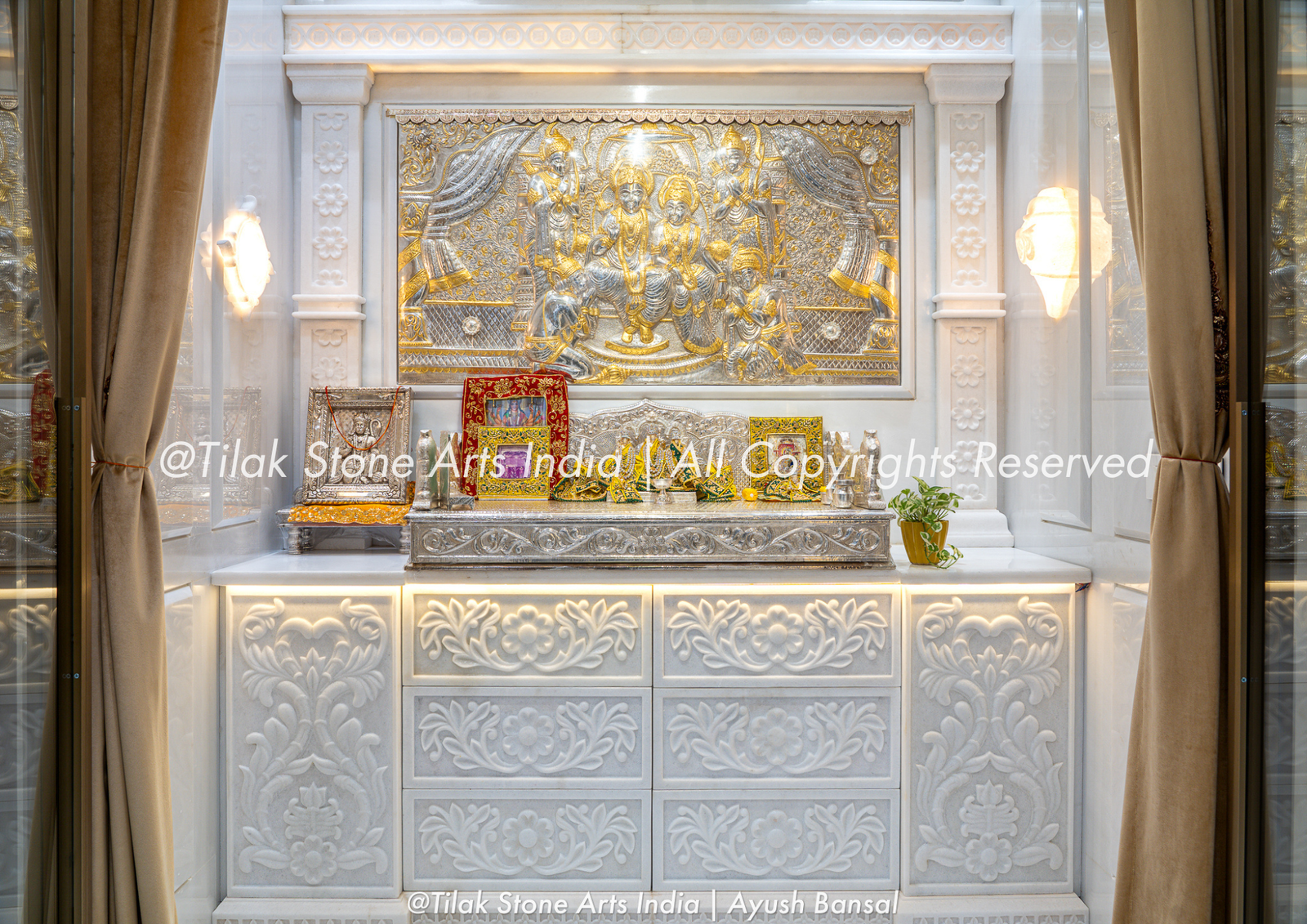
A home mandir is often selected from a catalogue image, yet the finished temple rarely depends on the picture alone. The marble temple manufacturer behind that image determines whether the carving stays crisp, the stone keeps its brightness, and the structure remains sound down the road. Families who overlook this decision quietly inherit problems that surface only years later.
A skilled marble temple manufacturer brings bespoke design, premium marble craftsmanship, end-to-end production, and professional installation together under one roof, giving homeowners a sacred space made to serve generations. This matters because a mandir is not a piece of furniture. It is a permanent architectural feature of the home, and every stage of its making shapes how gracefully it ages.
The Hidden Cost of Judging a Temple by Its Design Alone
A Beautiful Render Can Conceal Weak Execution: Two temples built from the same drawing can age in completely different ways. One holds its detail for decades, the other develops dull patches, hairline cracks, and loosened joints within a few years. The difference lies in stone grading, carving discipline, and assembly precision, none of which appear in a photograph or polished catalogue render.
Small Compromises That Grow Into Costly Repairs: In everyday project consultations, temple designers routinely meet families who bought on price and later faced re-polishing, joint repairs, or complete replacement within a decade. Inferior stone absorbs oil and moisture from daily rituals and stains permanently. Poorly cut joints trap water and widen over time. Each year of delay narrows the repair options available.
Craftsmanship That Decides How a Mandir Ages
Artisans Who Unite Traditional Carving With Contemporary Detailing: The finest temple work comes from carvers trained in classical jaali, pillar, and shikhar techniques who also understand modern design sensibilities such as clean lines, concealed lighting grooves, and minimalist plinths. Specialised mandir designers study both the material and the aesthetics through structured training and site visits, an approach that brings genuine order to a largely unorganised craft sector.
Custom Proportions That Fit the Home Precisely: The importance of customization shows most clearly in proportion. A temple sized exactly for its alcove distributes weight evenly, aligns with vastu directives, and leaves correct clearance for diyas and ventilation. Standard sizes force awkward adjustments during fitting, which places stress on the stone. Bespoke drawings, approved before carving begins, remove that risk entirely.
See also: How Family Counseling Helps Overcome Common Family Challenges
Stone Selection That Protects Beauty for Decades
Vietnam White Marble as the Benchmark for Temple Work: Vietnam White Marble, also known as Swiss White or Super Fine White Vietnam marble, offers high density, low porosity, and a uniform milky whiteness suited to sacred architecture. Its tight grain resists staining from oil, kumkum, and incense residue, and it holds fine carved detail without chipping, keeping ornamentation sharp through years of daily worship.
Grading Discipline That Separates Professionals From Traders: Reputable producers inspect each slab for veining consistency, thickness tolerance, and internal fissures before carving starts. Intermediaries and roadside vendors rarely apply this level of scrutiny, which is why sourcing through a structured production house protects buyers who once had to navigate dusty stone markets in search of dependable material and honest pricing.
Local Workshops Compared With Specialist Production Houses
What a Local Workshop Offers and Where It Falls Short: A neighbourhood workshop suits simple shelving or small repair jobs and often quotes a lower figure. Yet most lack design teams, stone grading systems, and installation crews, so buyers end up coordinating transport, fitting, and finishing themselves. For an intricate mandir, that fragmented approach multiplies the points where quality can quietly slip.
Where a Specialist Producer Justifies the Investment: A dedicated marble temple manufacturer manages drawing, carving, quality checks, logistics, and door-delivered installation as one accountable process, with project tracking at every stage. Households from India and Canada to Dubai now commission temples this way because a single responsible partner delivers exactly what was approved on paper, without intermediaries diluting the finished outcome.
What a Professional Partner Should Deliver on Every Project
Before commissioning, homeowners should measure any marble temple manufacturer against a clear set of expectations. These markers reveal whether a producer treats temple making as a professional discipline rather than a casual trade, and they reliably predict how smoothly the project will move from drawing board to a prayer-ready installation in your home.
- Bespoke design drawings prepared and approved before any carving begins.
- Certified Vietnam White Marble graded for density, uniform colour, and structural soundness.
- Skilled artisans experienced in both classical carving and contemporary temple styling.
- End-to-end production handled in-house without intermediaries or subcontracted stages.
- Professional door delivery and installation completed by trained fitting teams.
- Transparent project tracking so progress stays visible from order to handover.
Questions Homeowners Ask Before Commissioning a Mandir
How long does a custom marble temple take to produce?
Most bespoke home temples take between six and sixteen weeks depending on size, carving complexity, and finishing detail. Hand-carved elements such as jaali panels and domed shikhars extend timelines, while simpler contemporary pieces move faster. A confirmed drawing at the start keeps production firmly on schedule.
Does the Vietnam White Marble require special maintenance?
Routine care is simple. Wiping with a soft, slightly damp cloth removes daily residue, and prompt cleaning of oil or kumkum spills prevents marks. Because the stone is dense and low in porosity, it needs no frequent sealing or polishing when sourced and finished correctly.
Why does the producer matter more than the design itself?
A design is only a promise on paper. The marble temple manufacturer converts that promise into stone, and the grading, carving, and installation standards applied decide whether the finished mandir matches the drawing and endures. Two identical designs can become very different temples in different hands.
A Sacred Space Worthy of the Devotion It Holds
A well-made mandir rewards its family daily, holding its brightness through decades of prayer and becoming part of the home’s inheritance. Settling for uncertain workmanship usually costs far more later, once repairs and replacements enter the picture. Speak with a specialist design team, share your space and your vision, and book a consultation to begin shaping a temple that will serve generations.
